
 Request Consultation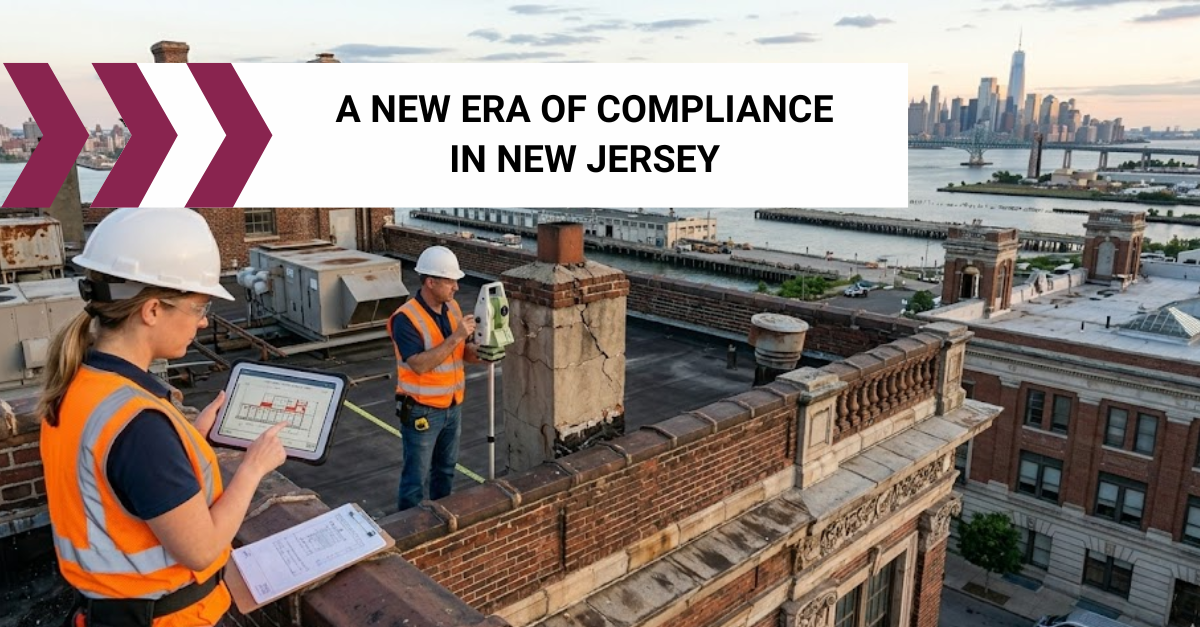
While many New York City local laws like FISP and Local Law 126 have been in place for years, a similar shift is now happening across the Hudson. New Jersey is actively implementing and enforcing mandatory structural inspections and reserve funding requirements. If you own or manage properties in New Jersey, this is an important time to pay attention and stay informed. These laws are evolving quickly, and ongoing updates will continue to impact how buildings are maintained, inspected, and funded.
A New Era of Compliance in New Jersey
New Jersey’s recent legislation and municipal ordinances signal a clear shift toward proactive building safety and long-term capital planning. What was once considered best practice is now becoming mandatory.
At the state level, the Structural Integrity and Reserve Funding legislation requires community associations to conduct regular inspections and maintain capital reserve studies. These studies must include a long-term funding plan, typically spanning 30 years, to ensure that buildings can be properly maintained without relying on reactive repairs or emergency assessments.
For property managers, this means financial planning and physical building conditions are no longer separate conversations. They are directly tied together under state law.
Reserve Studies: Financial Planning Meets Structural Responsibility
The updated reserve study requirements are one of the most significant changes affecting property managers in New Jersey.
Associations are now required to:
- Conduct professional reserve studies
- Update them regularly (typically every five years)
- Maintain a 30-year funding plan for major repairs and replacements
- Ensure adequate reserves are in place to cover future capital expenses
This is not just a financial exercise. Reserve studies now incorporate structural evaluations, anticipated repair timelines, and lifecycle costs for key building components.
For property managers, this creates a more transparent and predictable framework, but also raises the bar for accountability. Underfunded reserves or deferred maintenance are no longer just operational risks; they can become compliance issues.
Fort Lee: Mandatory Parking Structure Inspections
At the municipal level, Fort Lee is leading the way with Ordinance 2025-17, which mandates regular parking structure inspections.
The ordinance requires:
- Inspections every five years
- Evaluations performed by a New Jersey licensed professional engineer
- Submission of detailed reports to the municipality
- Classification of structures as Safe, Safe with Engineering Monitoring, or Unsafe
The first round of inspections must be completed by December 31, 2026, for applicable structures.
For property managers, this introduces a structured inspection cycle similar to what NYC has enforced for years. Parking garages, often exposed to harsh conditions like moisture, salt, and heavy loads, are particularly vulnerable to deterioration. These inspections are designed to identify issues early, before they become safety hazards or require costly emergency repairs.
Expanding Local Oversight: Facade and Structural Inspections
Beyond Fort Lee, municipalities like Jersey City and Hackensack are also implementing or strengthening requirements for facade and parking structure inspections.
While each ordinance varies in scope and timing, the intent is consistent:
- Ensure public safety
- Identify deterioration early
- Standardize inspection and reporting processes
- Hold property owners accountable for ongoing maintenance
These local laws mirror the philosophy behind NYC’s FISP program; regular, mandated inspections that create a consistent baseline for building safety.
For property managers operating across multiple jurisdictions, this creates a more complex compliance landscape. Each municipality may have different timelines, reporting requirements, and enforcement mechanisms.
Why This Matters for Property Managers
These changes are not just regulatory hurdles, they fundamentally reshape how properties must be managed.
1. Proactive vs. Reactive Management
Mandatory inspections and reserve studies shift the focus from reacting to problems to anticipating them. This reduces risk, improves safety, and allows for more strategic capital planning.
2. Increased Accountability
With required reporting, documentation, and professional oversight, property managers are now accountable not just to ownership, but to municipalities and regulatory bodies.
3. Budgeting and Capital Planning
Reserve studies and inspection findings must align. If a structural issue is identified, funding must be available—or planned—for repairs. This eliminates the gap between identifying problems and addressing them.
4. Risk Mitigation
Failure to comply can result in penalties, liability exposure, and reputational damage. More importantly, it increases the risk of structural failures that could impact occupant safety.
5. Operational Continuity
Unexpected repairs can disrupt tenants, residents, and operations. A structured inspection and funding plan minimizes these disruptions by addressing issues in a controlled, planned manner.
The Bigger Picture
These regulations are part of a broader industry shift driven by high-profile structural failures and increased public awareness of building safety. New Jersey is taking a more proactive stance, aligning with national trends that prioritize inspection, transparency, and long-term planning.
For property managers, the takeaway is clear: compliance is no longer optional, and waiting is no longer a strategy.
Staying Ahead of What’s Next
As more municipalities adopt inspection ordinances and the state continues refining its requirements, staying informed is critical.
Property managers should:
- Review their portfolios for buildings that fall under these requirements
- Establish inspection timelines before deadlines approach
- Align reserve studies with anticipated structural needs
- Work with qualified engineers and consultants to ensure compliance
The shift happening in New Jersey is not temporary. It represents a long-term change in how aging buildings are evaluated, maintained, and funded.
Those who take a proactive approach will not only stay compliant, they will protect their assets, their residents, and their long-term investments.