
 Request Consultation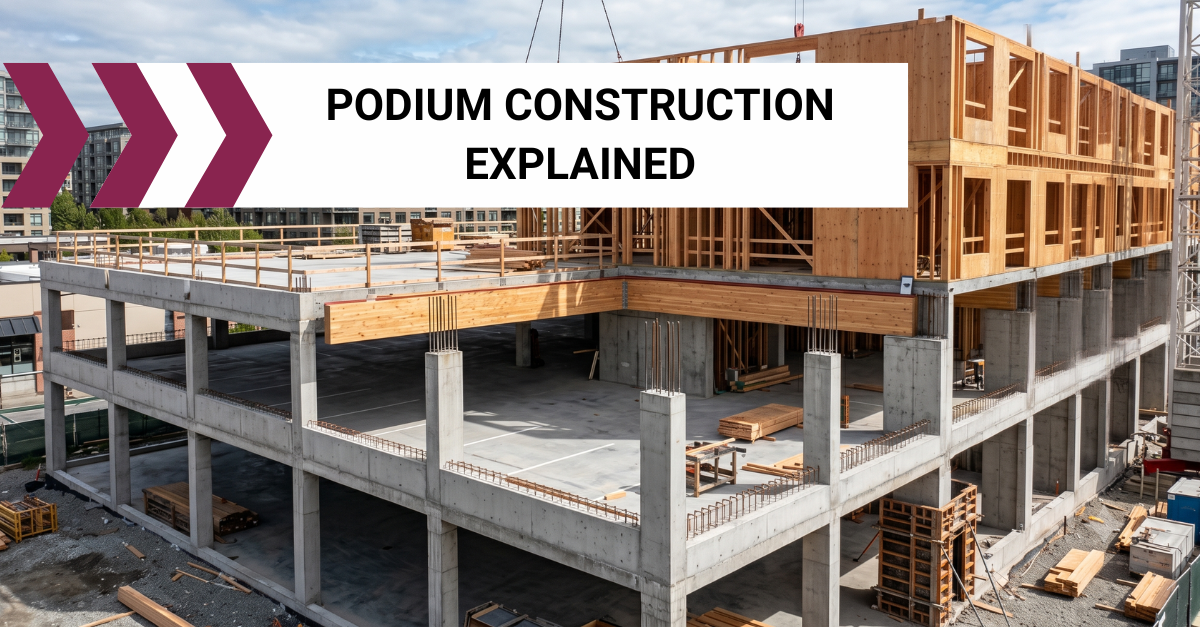
As multifamily developments continue to grow in scale and complexity, podium construction has become one of the most widely used building strategies across urban and suburban markets. From mixed use developments and apartment communities to student housing and hospitality projects, podium structures provide architects and developers with a practical solution for maximizing density while maintaining design flexibility.
Although podium construction is now common throughout the industry, it presents unique structural considerations that can significantly influence project design, cost, and constructability.
For architects, understanding how podium systems work and how structural decisions affect the overall building can help create more efficient, coordinated projects from the earliest stages of design.
What Is Podium Construction?
Podium construction typically consists of a concrete or steel framed lower-level structure that supports multiple stories of wood framed residential construction above.
The most common configuration is often referred to as a wood over podium system.
In many cases, the lower podium levels accommodate:
- Parking garages
- Retail spaces
- Building amenities
- Commercial occupancies
- Residential lobbies and common areas
Above the podium, several stories of wood framing are used for residential units.
This approach allows developers to achieve higher density while taking advantage of the cost efficiency associated with wood construction.
Why Podium Construction Has Become So Popular
Podium construction offers several advantages that make it attractive for multifamily developments.
First, it maximizes land use efficiency. Parking, retail, and amenity spaces can be incorporated into the lower levels while residential units occupy the stories above.
Second, it provides flexibility in site planning. Architects can create active street fronts, integrate mixed use components, and accommodate challenging urban sites.
Third, wood framing above the podium often reduces overall construction costs compared to all concrete or steel structures.
These benefits have made podium buildings a preferred solution in many markets where land values and housing demand continue to rise.
The Structural Transition Is Often the Biggest Challenge
While the concept appears straightforward, one of the most significant engineering challenges occurs at the transition between the podium and the wood framed structure above.
The residential floors typically follow a repetitive and efficient framing layout. The podium levels below often require much larger open spaces to accommodate parking layouts, retail tenants, loading areas, or amenity spaces.
As a result, the structural grids above and below rarely align perfectly.
Structural engineers frequently design transfer systems that redirect loads from upper-level walls and columns to the supporting structure below.
These transfer elements may include:
- Transfer beams
- Transfer girders
- Transfer slabs
- Deep structural members
- Specialized framing systems
The design of these elements often has a substantial impact on cost, floor to floor heights, and construction sequencing.
Column Layout Requires Early Coordination
One of the most important aspects of podium design is column placement.
Architects naturally focus on creating efficient residential layouts above while also maximizing parking efficiency below. Unfortunately, these objectives do not always align.
Small changes to unit layouts can create significant structural implications when loads must be transferred through multiple stories.
Early collaboration between architects and structural engineers helps identify opportunities to align structural elements wherever possible.
Even modest adjustments during schematic design can improve structural efficiency and reduce the need for costly transfer systems later in the project.
Parking Requirements Influence Structural Design
Parking garages are often the driving force behind podium construction.
From a structural perspective, parking levels require larger spans and wider column spacing than residential floors.
Design teams must account for:
- Vehicle circulation
- Parking stall dimensions
- Ramp configurations
- Headroom clearances
- Future maintenance access
The parking layout frequently establishes the structural framework for the podium.
Because of this, parking design decisions can influence everything from column locations to residential unit planning above.
Successful projects treat parking design as an integrated component of the overall structural strategy rather than an isolated planning exercise.
Lateral Stability Becomes More Complex
Every building must resist wind and seismic forces.
In podium structures, the transition between different construction materials and framing systems introduces additional complexity.
The concrete podium and wood framed structure above may behave differently under lateral loading conditions.
Engineers must carefully evaluate:
- Shear wall placement
- Diaphragm behavior
- Load transfer mechanisms
- Building drift
- Differential movement between systems
Proper coordination is essential to ensure lateral forces are transferred safely and efficiently throughout the structure.
Fire Resistance Plays a Critical Role
Podium construction relies heavily on code compliant fire separation between occupancies and construction types.
The podium itself often serves as a critical fire resistant horizontal separation between the lower and upper portions of the building.
Structural systems must be designed to maintain required fire ratings while accommodating architectural, mechanical, and construction requirements.
These considerations often influence:
- Slab thicknesses
- Structural member sizing
- Penetration coordination
- Construction detailing
Understanding these requirements early can help prevent costly revisions during permitting and construction.
Building Movement Must Be Considered
All buildings move over time.
Concrete shrinks and creeps. Wood experiences moisture related expansion and contraction. Temperature changes can also affect structural performance.
In podium buildings, different materials may move at different rates.
Structural engineers evaluate these effects to minimize:
- Cracking
- Differential settlement concerns
- Cladding issues
- Interior finish damage
- Long term serviceability problems
Accounting for these movements during design helps improve long term building performance and durability.
Constructability Matters as Much as Design
A structurally efficient design on paper is only successful if it can be built efficiently in the field.
Construction sequencing often plays a major role in podium projects.
Engineers and contractors must coordinate:
- Temporary shoring requirements
- Concrete placement sequences
- Material staging
- Framing transitions
- Schedule impacts
Projects that consider constructability early typically experience fewer delays and coordination challenges during construction.
The Value of Early Structural Involvement
Podium construction offers tremendous opportunities for architects and developers, but it also introduces structural challenges that require thoughtful planning.
Many of the most significant issues involving transfer systems, column alignment, parking layouts, and lateral stability can be addressed most effectively during the earliest phases of design.
When structural engineers become involved early, project teams gain a clearer understanding of how architectural decisions influence structural performance, cost, and constructability.
The result is a more coordinated design process and a building that performs as intended throughout its lifespan.
Building Better Multifamily Projects
Podium construction has transformed the multifamily industry by allowing projects to achieve greater density, flexibility, and efficiency. However, these benefits depend on a carefully coordinated structural design strategy.
For architects, understanding the structural realities behind wood over podium and concrete podium developments can lead to better decisions, stronger collaboration, and more successful projects.
The most effective podium buildings are not simply designed from the top down. They are developed through close coordination between architects, structural engineers, and contractors working together to create safe, efficient, and durable structures that support the needs of both residents and owners for years to come.